
Admissions Contact
Undergraduate Recruitment & Admissions

Academic Contact

Laurie A Walter
Assistant Professor
Nursing
BSN Program Coordinator
Nursing
Nicolaus Copernicus Hall
22504

Nursing, BSN

Central to Advancing Healthcare.

Central’s Bachelor of Science in Nursing offers one of Connecticut’s top nursing educations, ranked #3 in the state by RNCareers.org. Students start with a strong academic foundation and advance into hands-on, high-impact learning guided by expert nurses who understand the realities of today’s healthcare field. Our program is designed to help students pass the NCLEX on the first attempt and launch their career with the confidence, skills, and clinical experience employers value.

Program Features

  • 120-credit program
  • A fully in-person learning experience
  • Access to state-of-the-art facilities including high-fidelity simulation and virtual reality technology
  • Faculty with experience in a variety of nursing disciplines
  • Clinical experiences with trusted practice partners throughout Greater Hartford
  • Opportunities to engage with the community in the Central Community Health Education Clinic
  • Dedicated faculty support with individualized advising
  • On-campus childcare
  • Financial aid and scholarships available 

Success Starts Here

Central’s 3-year average NCLEX-RN passing rate is 92% (2019-2023) earning it an overall grade of A from RNCareers.org 
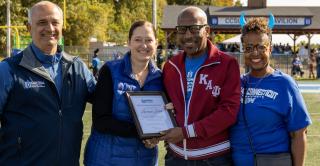
The Central nursing program provided me with the foundation to grow professionally, clinically, and emotionally. This program places a high premium on the growth of its students and graduates enter the field of nursing with all of the right tools to make an immediate impact. The friendships and working relationships that I’ve forged through my time as a student in the Central nursing department are withstanding and have allowed me to make a difference in the lives of others. Central nursing provides its students with all of the right values and tools to provide patients with high level care. The nursing department is well respected throughout the state of Connecticut and continues to mold excellent nurses that provide care in diverse settings.

Darius Edwards, BSN, RN
current DNAP student class of 2026

Learning Outcomes

  1.  Incorporate theoretical concepts and foundational knowledge from liberal education to guide nursing practice.
  2. Provide patient-centered care that recognizes individual and/or family preferences, values, and needs, respecting patients and families as full partners in care. Integrate knowledge, skills, and attitudes through the nursing process to provide person- centered care to clients across the lifespan from a diverse perspective.
  3. Promote individual and population health, wellness, and disease prevention at the global/local level. Provide innovative interventions to promote health and prevent illness in vulnerable populations.
  4. Integrate current best evidence and professional standards into nursing practice with consideration of clinical expertise and patient preferences and values. Critically evaluate evidence-based research in collaboration with other members of the healthcare team to improve client outcomes.
  5. Minimize risk of harm to patients, providers, and the public through continuous improvement in both system effectiveness and individual performance.
  6. Function effectively within nursing and interprofessional teams to foster open communication, collaboration, mutual respect, and shared decision-making. Incorporate inter- and intra-professional communication and collaborative skills into the delivery of evidence-based, culturally sensitive person-centered care.
  7. Demonstrate responsiveness to the larger content of the healthcare system regarding regulatory, financial, and political factors that influence the quality and value of care. Advocate for socio-political issues affecting healthcare through participation in legislative and political forums.
  8. Use information and technology to provide care, communicate, educate, manage knowledge, prevent errors, and make critical decisions that optimize patient outcomes. Demonstrate skills in using healthcare technologies, information systems, and communication devices that support safe nursing practice.
  9. Demonstrate behaviors consistent with social justice, legal and ethical accountability, and professional codes and standards. Practice from a caring, professional nursing perspective by incorporating the values of social justice, diversity, and global awareness.
  10. Apply leadership and management principles to achieve quality and safety outcomes. Apply leadership concepts, skills, and decision-making in providing high-quality nursing care, health care team coordination, and accountability in various settings.