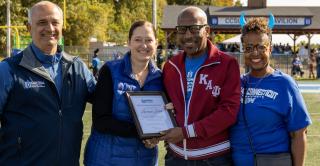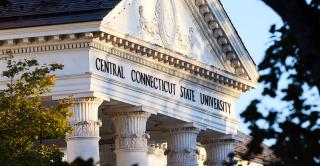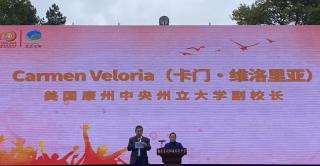
Central delegation travels to China to celebrate C.J. Huang

The Central LASER group is a research group focused on using laser radar and optical techniques to study the atmosphere for applications such as air quality, climate change and atmospheric dynamics. Led by Dr. Nimmi Sharma, an enthusiastic group of undergraduate research students conduct experimental research on optical instrument design, laser radar (Lidar) studies of the atmosphere and environmental optics. Instrumentation includes Light Detection and Ranging (Lidar) laser systems which are used to study atmospheric phenomena, optical laser particle counters, solar radiometers, and nephelometers, all housed in a mobile laser lab. Research encompasses both experimental and analytical components. Applications include atmospheric physics, air pollution and climate change. We shine large green lasers into the night sky and study the scattered laser light to reveal invisible atmospheric properties. Projects include development of novel lidar instruments, tracking long range transport of dust from Asia over Hawaii, investigating aerosol properties affecting climate change, studying efficacy of different masking materials in blocking airborne particulates, and measuring air pollution during recent Canadian Smoke events. We collaborate with scientists at the National Oceanic and Atmospheric Administration, University of Rhode Island, University of the Bahamas and more.
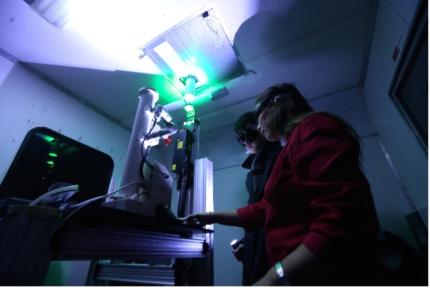
| Central Laser Group students conduct research with state-of-the-art laser equipment, performing experiments in Mobile Lidar Lab (above and below left) and working on laser instrument design in Optics Lab (below right). |
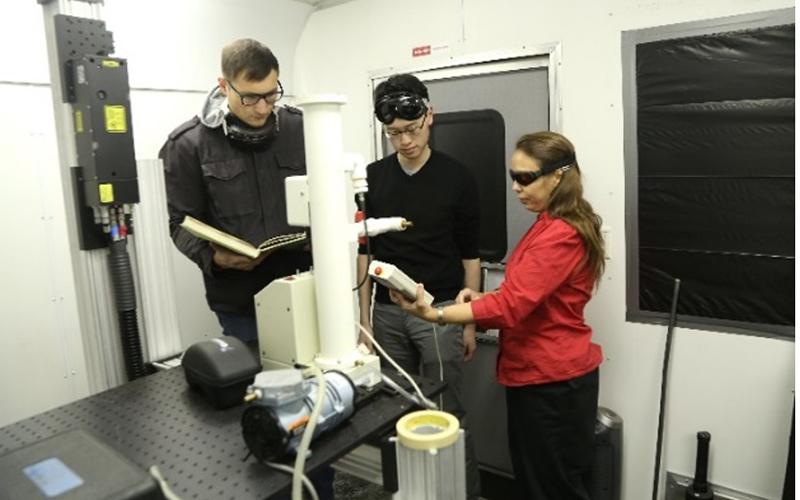
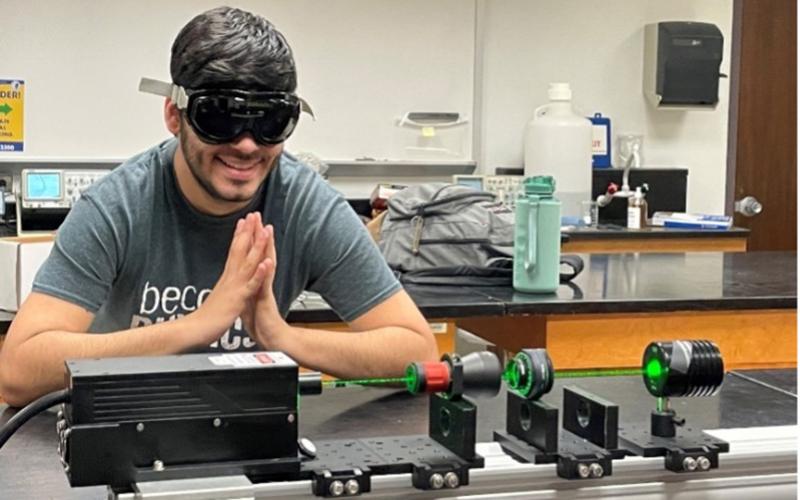
| Central Laser Group students conduct research with state-of-the-art laser equipment, performing experiments in Mobile Lidar Lab (above and below left) and working on laser instrument design in Optics Lab (below right). |
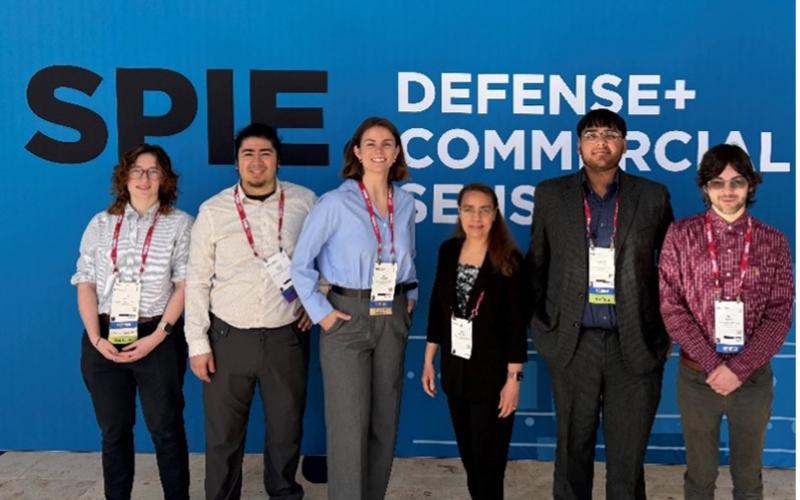
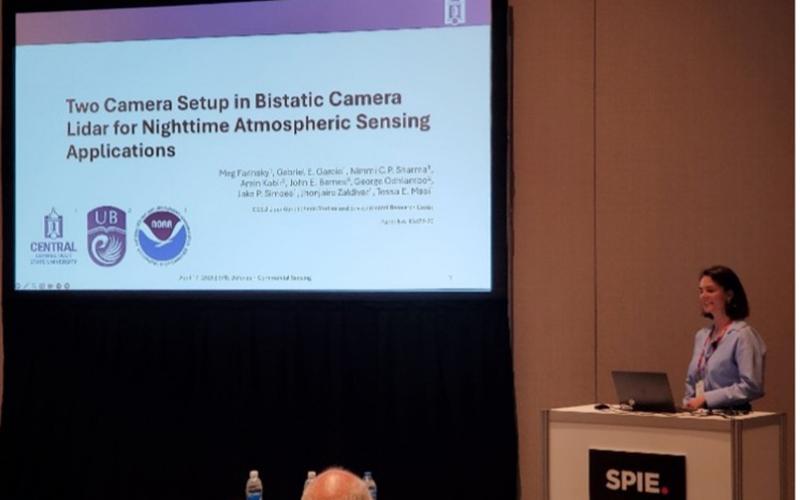
| Beginning undergraduate students in this highly successful research group routinely present their work at regional meetings of the New England Section of the American Physical Society and have been frequent award winners. As students progress in their research skills and background, students have presented at national and international conferences including SPIE Asia in Hawaii, The European Space Agency Meeting in Italy, and SPIE Defense and Sensing in Florida. |
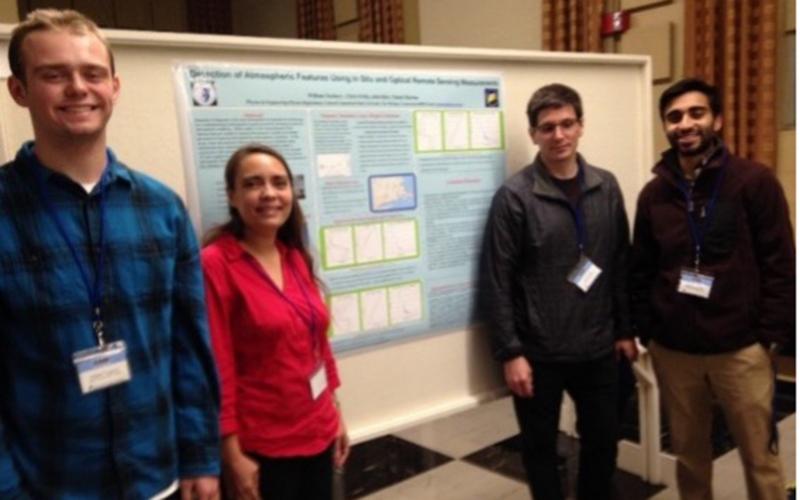
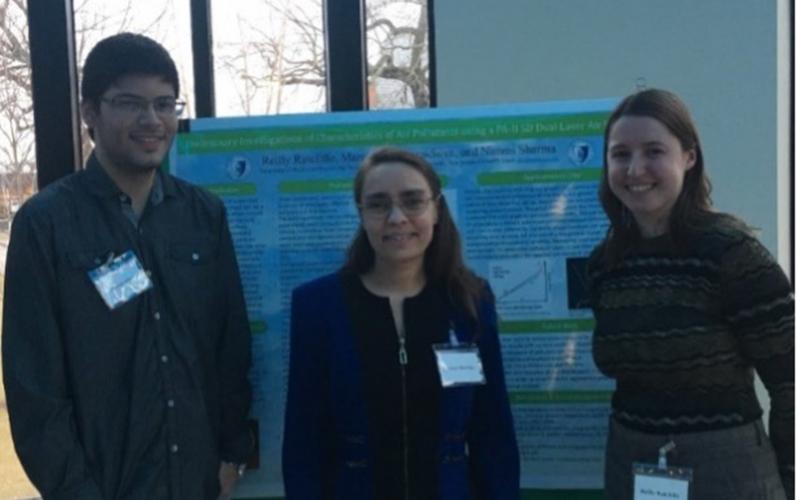
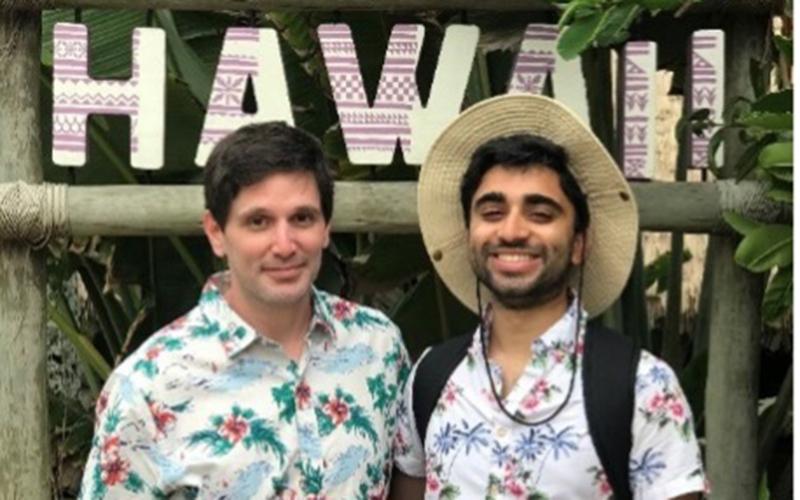
| Central undergraduate LASER group members with Dr. Sharma (left), Central student presenting at SPIE Defense and Sensing in Florida (center), LASER Group students at their presentations including at SPIE Asia, Hawaii (right). |
The LASER Group collaborates with a group at the University of the Bahamas, a group at University of Rhode Island and with scientists at the National Oceanic and Atmospheric Administration.
Experience gained through participation in the LASER group research is very valuable for future jobs and graduate school admissions. Students who have been involved in the LASER group have gone on to graduate schools including Yale and Columbia, have worked at Optics companies such as ASML, and have jobs such as Beam Physicist at the National Superconducting Cyclotron Laboratory at MSU. They have been awarded highly prestigious fellowships and prizes including NASA’s John Mather Nobel Scholarship.
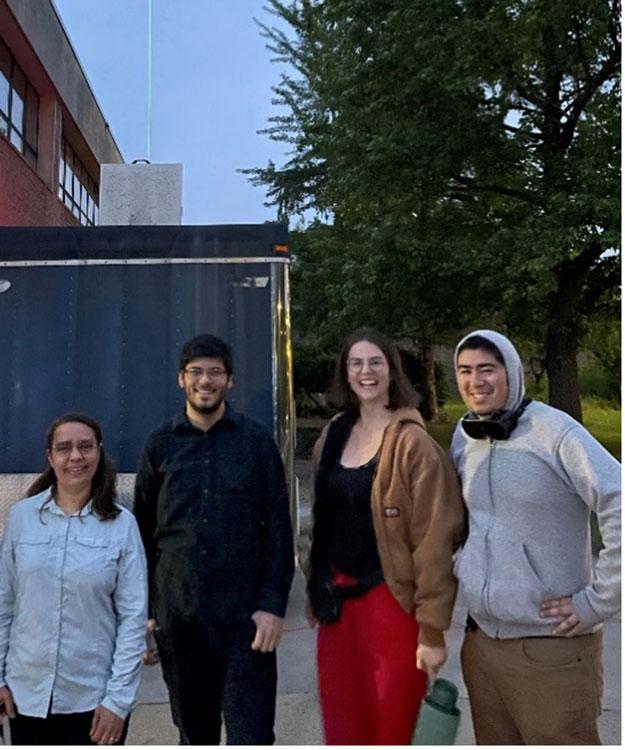
| Central LASER group members with Dr. Sharma (left) and green laser beam |
Interested in joining our exciting group?
Please contact Nimmi Sharma at sharmanim@ccsu.edu
Student Seth Gagnon at Central described project participation as vitally important in his college education. “The independent problem solving that this research has taught me is a priceless skill that I will carry with me and continue to build for the rest of my career. Being forced to solve complex problems, and to present solutions in publications or presentations where their validity will be questioned by other physicists, has been the experience that has taught me the most, and also empowered me the most in my undergraduate career. I was excited to join a research group where I had seen students be so successful, be it with poster presentations or publications. The Lidar research group is perhaps the most active and rigorous group in our department, and it is precisely this experience that has prepared me to continue my education in graduate school.”
Central student Alicja Urbanczyk described developing independent research skills and core capability of being able to identify what it is that you do not know and how to learn it so you can solve problems through the project. “Since joining the Lidar research team at Central, my independent research skills have grown tremendously. It has allowed me to learn about the expectations and responsibilities that are required for a successful research team. Although our team faces problems and hurdles, we overcome each one through (sometimes hours) [of] our own troubleshooting methods. Each problem allows us the opportunity to think outside the box and develop new ideas on how to isolate the problem and develop methods to eradicate it.”
Central student Justin Fagnoni speaks to how the research helped deepen his course experiences: “Two of my favorite courses in the physics curriculum are electricity & magnetism and optics. The CLidar [CCD Camera Lidar] research offers firsthand experience with a practical application of some of the material discussed in these courses. Learning the theory in itself was exciting, but witnessing what can be done with such theory has been particularly rewarding. I am grateful for the opportunity to participate in the CLidar research at Central because it has fostered growth and helped me to develop new skills as a physicist. For instance, it has provided me with experience in constructing models from empirical data that accurately depict physical phenomena. Furthermore, it has pushed me to look deeper into and better my understanding of topics including Rayleigh scattering theory and atmospheric radiative transfer.”