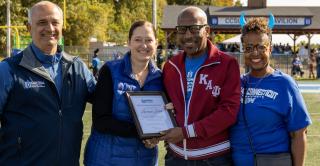
Central honors Admissions Director Larry Hall with Distinguished Service Award

Etymology & Origins
Πολύτεχνος
— Many Arts. Not just technology.
#CentralApplied
Central Connecticut State University • R2 Polytechnic Exploration
We are exploring the opportunity to further define Central through a polytechnic model — one that intentionally integrates applied learning, research, innovation, and our strong liberal arts and social sciences foundation.
"The future is Central — and it will be built together."
— President Zulma R. Toro
President Zulma R. Toro · End of Year Address · Central Connecticut State University
Task force videos
Latest update available
View update →Of Central's majors already incorporate experiential learning
Campus Engaged Learning • 2026
Enrollment growth in Sculpture after XR & 3D integration
Art & Design • Four Semesters
Faculty program proposals across every school
Academic Programs Task Force • 2026
In their own words. Your colleagues speak.
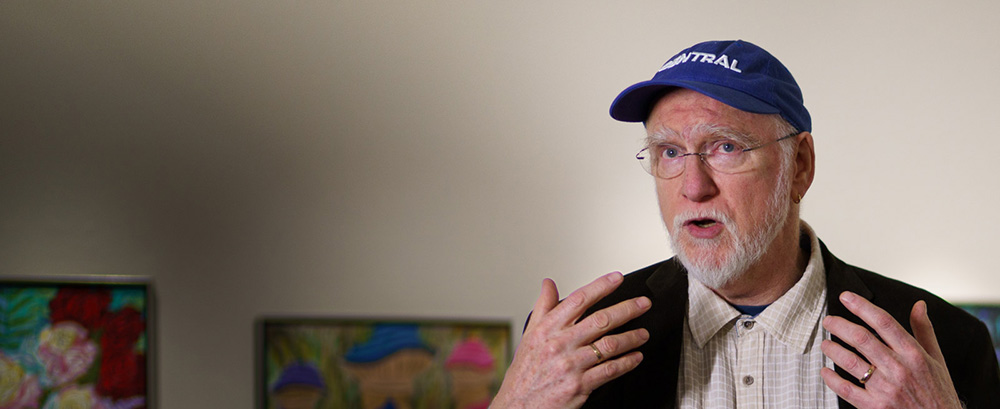
No other degree teaches about being human more than art. The original polytechnics were the broadest of institutions — not the narrowest.
Craig Frederick
Professor of Sculpture & 3D Design
School of Visual and Performing Arts
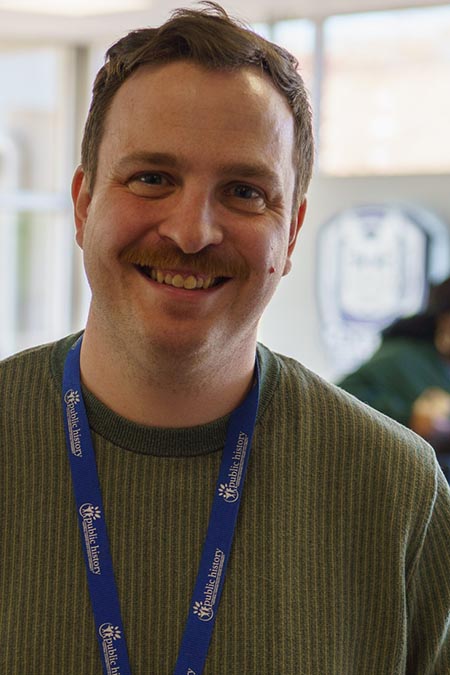
Us in the humanities should not be afraid of this. Central has given us the freedom to think creatively.
Tyler Kynn
Associate Professor, History / Game Studies
Carol A. Ammon College of Liberal Arts & Social Sciences
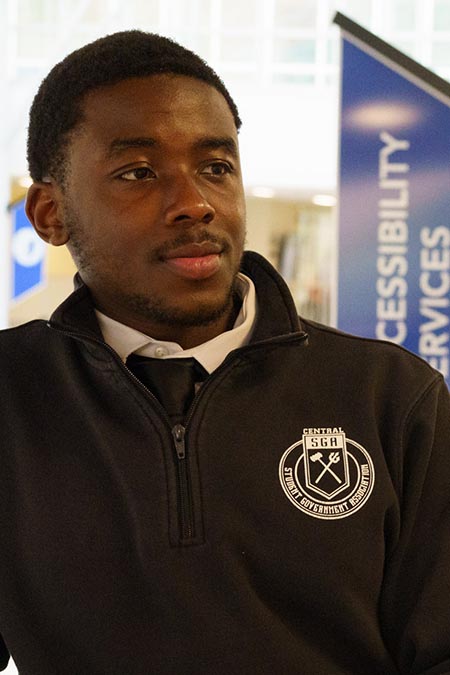
You study and learn to do it in the same place.
Malachi Collins
SGA Vice President
Management Information Systems & AI
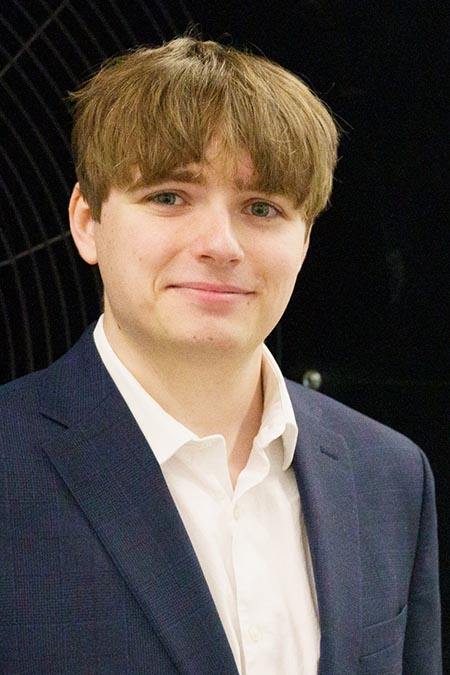
Polytechnic is an enabler — a benefit to all.
Aidan Bowser
Student, Mechanical Engineering
School of Engineering, Science and Technology
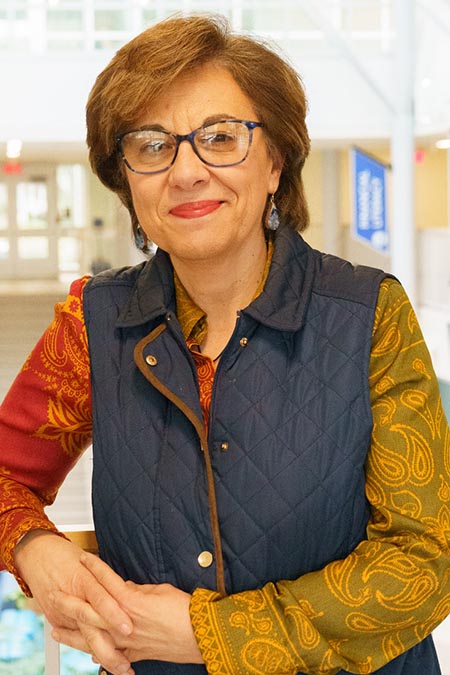
Not just the vocabulary — the cultural competence to help other people.
Prof. Lourdes Casas
Spanish Language & Literature • Study Abroad Coordinator
World Languages, Carol A. Ammon College
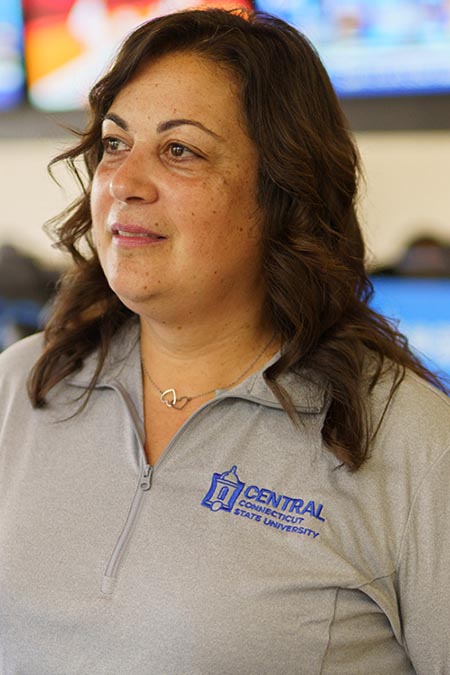
The FAA is looking to hire video gamers for air traffic controllers.
Tina Rivera-Rowe
Associate Director of IT Strategic Initiatives
24-Year Journey at Central
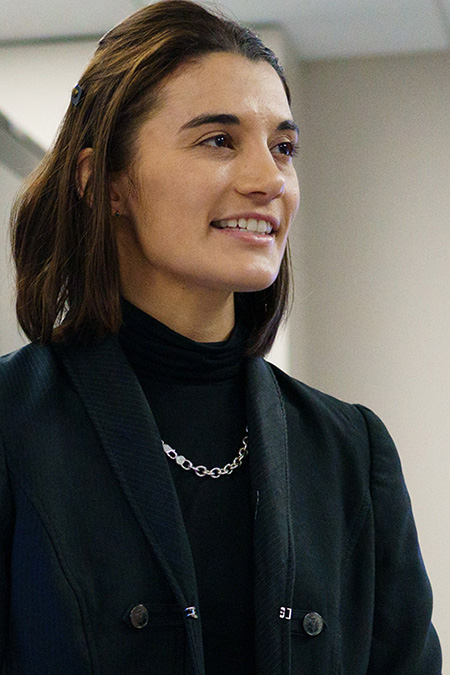
We are writing this stuff — making up our own words.
Sadie Simek
Student, AI & Cybersecurity
School of Engineering, Science and Technology
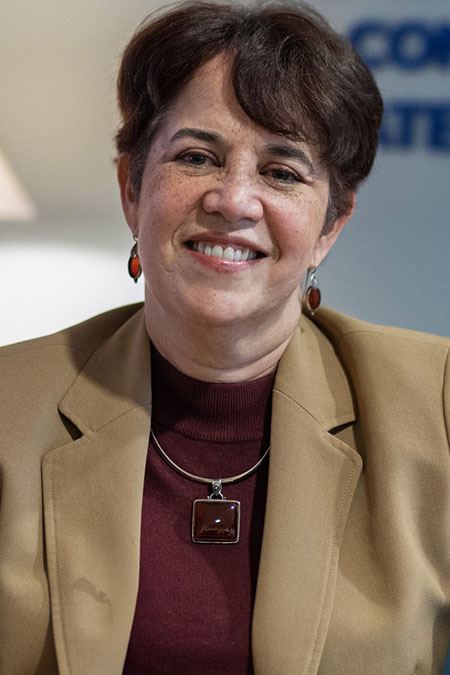
It’s a story about not only technology, but access and opportunity for the community.
Beatriz Gutierrez
President & CEO, CONNSTEP
Connecticut Manufacturing & Technology
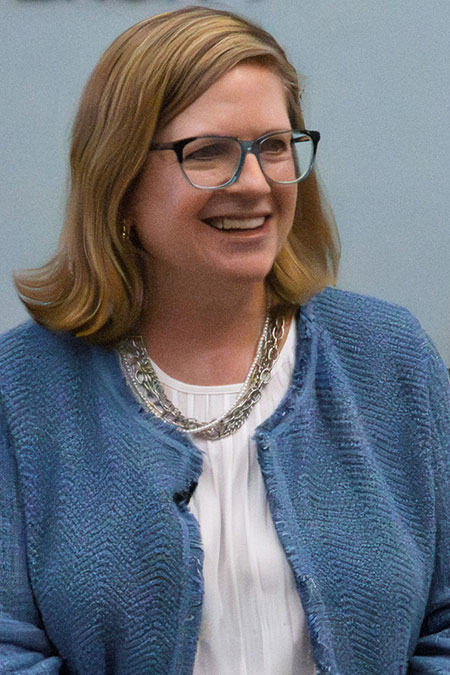
I only see this designation as being an enhancement of the programs that are currently offered at Central Connecticut State University.
Michelle Gilman
Commissioner, CT Dept. of Administrative Services
CCSU Alumna
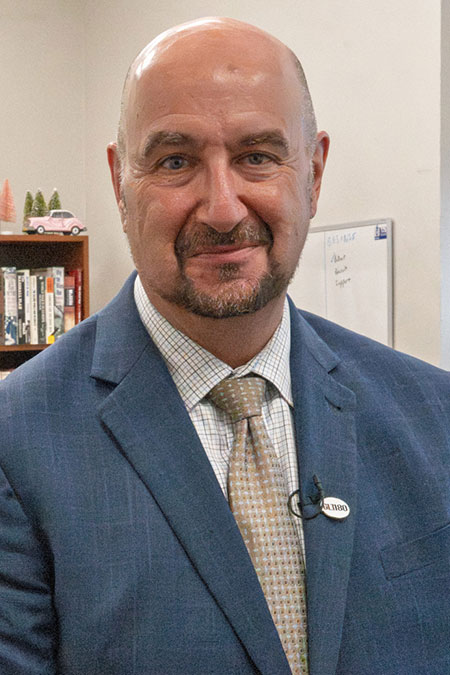
My goal is that every student who graduates from New Britain High School and then hopefully comes to CCSU lives what I call a purposeful life.
Tony Gasper
Superintendent, New Britain City School District
CCSU Alumnus
"The higher education landscape is evolving, and Central's unique programs and experiences have put us in a position to create a new pathway for students to succeed and for the state to thrive in the future. We are exploring this idea together, and we want everyone to be involved."
President Zulma R. Toro
President, Central Connecticut State University
Research, presentations, and supporting materials from the R2 Polytechnic exploration process.
R2 Polytechnic University — Open Forum Presentation
Overview of the investment case development process, presented at the February 2026 all-campus open forum.
Download ↓ PDFConversations with Art Faculty
Discussion document exploring the relationship between arts education and polytechnic designation at Central.
Download ↓ PDFCareer Readiness Pathway: Psychology Degree & Student Preparedness
How a psychology degree answers the stakeholder call for career-ready students in a polytechnic context.
Download ↓A Comprehensive Polytechnic University looks like Central. There is a focus on applied learning opportunities and technological awareness building, balanced with humanities, arts, literature, and social sciences. The “Comprehensive” part ensures that tomorrow’s leaders are able to use modern technologies with the wisdom that comes from a strong Liberal Arts exposure.
The word comes from the Greek: poly means “many,” techne means “art” — all the arts and sciences together. A comprehensive polytechnic university teaches you to think deeply and to put that thinking to work in the real world.
It is not a trade school or a vocational school. It is not only science and engineering. At comprehensive polytechnics, you will find nursing students, musicians, social workers, historians, engineers, and artists — all learning together, all taking what they study out into the real world.
As President Toro says: “Polytechnic doesn’t mean less of what we are. It means more.”
This process has many steps, and only the first part has been decided. The first step is to present the “Investment Case” — provide concrete examples of how and why this could be good for Central, its students, and the community, and what the investment from the State of CT should look like to support it. This is the piece that is happening now. It is an ongoing exploration. Eight task forces made up of faculty, staff, students, and community members are building the case together. The process is open and ongoing through summer 2026.
The completed proposal goes to the Connecticut Board of Regents for Higher Education in Fall 2026. If the Board supports it, the proposal then goes to the Connecticut General Assembly in February 2027. Nothing is finalized until those approvals happen.
Your voice matters. The open forums, surveys, and emails to Dr. Toro were, and are still, all a part of this journey, and you are encouraged to submit your ideas, questions, and concerns to the form on this page.
No. Tuition and fees are set by the Connecticut Board of Regents for Higher Education — not by the designation. There are no plans to change them as part of this designation. Tuition changes over time, independently of this exploration, not as a result of it.
Central is committed to staying the most affordable university in the Connecticut state system. Access is core to our mission. That does not change.
No. There will be no recommended eliminations or reductions in support of any existing academic programs at Central as part of this polytechnic case. That is the official, public commitment.
What this exploration is doing: looking at how every program — from nursing to philosophy, from engineering to music — is already preparing students for meaningful careers and civic engagement. We are not taking things away. We are finally showing the full picture of what Central does.
President Toro: “We are not subtracting. We are finally showing the full picture.”
They stay. They grow. And they are central to this vision — not an afterthought.
The liberal arts and social sciences are one of two equal pillars. Applied science and technology is the other. Neither stands above the other. That is the model.
Here is what that looks like in practice: Craig Frederick is an art professor in Central’s ceramics program. When virtual reality sculpting and 3D printing was added to his class, enrollment grew 140% in four semesters. That’s an art professor. That’s a polytechnic result.
At Cal Poly Humboldt, which received a similar designation in 2022, their theater program became one of the largest on campus after the designation — not in spite of it. At the University of Wisconsin-Stout, five of six academic clusters are non-STEM. In fact, if you look at ALL of the universities that have converted to Polytechnic, you see strong continuing and growing liberal arts and non-STEM programs across campuses.
The Carol A. Ammon College of Liberal Arts and Social Sciences will continue to hold a pivotal position at Central. A dedicated task force is working specifically to define and protect that role.
No. This is one of the most common worries people have, and we want to be honest about it: it makes sense to ask. But a comprehensive polytechnic is different from a specialized tech school.
Look at the facts from multiple sources, not just one: At the University of Wisconsin-Stout — a polytechnic since 2007 — five of six academic clusters are outside of STEM. At MIT, one of the world’s most famous polytechnics, the liberal arts and humanities are ranked among the world’s best. At Cal Poly, liberal arts and social sciences are prominent on the front page of their website.
At Central, every student — no matter what they study — is part of this. Nursing, psychology, social work, music, history, business: all of it belongs in a comprehensive polytechnic.
Your degree, your financial aid, and your coursework are not affected. The polytechnic designation is about how Central presents itself and grows — not about changing the path you are already on.
Central is committed to honoring every student’s existing program of study. If you started a degree at Central, you will finish that degree at Central. If the investment case goes forward, and the polytechnic designation is adopted, you may even find a few more doors get opened along your journey.
Applied learning means taking what you study in class and using it in the real world — before you graduate. It looks different depending on your major. For a nursing student it might be a real clinic. For a history student it might be a research project with a community partner. For an engineering student it might be building something for an actual client.
As part of the Comprehensive Polytechnic commitment, every Central student — no matter what they study — will have at least two applied learning experiences built into their education. This is new or expanded for some programs, and it is one of the most meaningful things this initiative delivers.
Alumni have asked for exactly this: they want to see applied learning reach all students, not just those in STEM. This is the answer to that ask.
AI is changing every field — not just tech. At Central, we believe every student deserves to understand it, no matter what they study.
As part of this initiative, Central is committing to AI literacy for all students. That means three things: understanding how AI is being used in your field, understanding its limits and real-world implications, and knowing how to use it responsibly and ethically.
As President Toro put it: “The future relies on people who can advance and question at the same time. That’s exactly what a Central education builds.”
Several things are happening at the same time — and if Central waits, the moment passes.
Right now, about 700 Connecticut students a year leave the state to go to polytechnic-type schools elsewhere. Most of them never come back. Connecticut loses their talents, their careers, and their contributions to the local economy.
At the same time, there is a window in the Connecticut legislature. The state can only act on this kind of initiative every two years. Miss this cycle, and the next opportunity is years away.
President Toro: “We are not just building a better Central. We are building a reason for Connecticut students to stay home.”
The workforce needs it too. Five major Connecticut employers have relocated headquarters to Massachusetts, citing the quality of the talent pipeline. This designation is Central’s contribution to solving that.
And the One Big Beautiful Bill Act that passed in 2025 requires all universities — public and private — to prove through data collection that their graduates earn more than those with just a high school degree, or they lose their access to federal loans for incoming students. The majority of job postings available on LinkedIn now require AI literacy and knowledge, and they pay on average 52% more in starting salaries for those hires. These are the ways Central can provide the best comprehensive education and job readiness at the same time.
Yes — that is one of the central purposes. At the University of Wisconsin-Stout, which has been a polytechnic since 2007, the employment rate for graduates has been above 97% for over fifteen years. That’s across all majors, not just engineering.
At Central, deepening the connections between classroom learning and real employers — in every field — is what this is about. The goal is not just a diploma. It is readiness.
President Toro: “I want you to leave Central ready, not just educated. Ready. That is the promise we are making.”
Central’s mission is access, completion, talent, and impact. That does not change. We are not trying to change who comes here — we’re trying to be better for the students who already do.
We do hope to attract more students — including students who right now are leaving Connecticut because they do not think Central offers what they need. Those are Connecticut students who belong here. Bringing them home grows the enrollment, which in turn grows the financial aid pool for students who need it.
CCSU alumni have asked us directly to make sure the benefits of real-world, hands-on learning reach all students equally — not just those in STEM. This initiative is the answer to that request. It is an expansion of access, not a narrowing of it.
Maybe — but no decision has been made. A name change is one element of the broader exploration. The Institution Name Task Force is working on it specifically. Any change would require approval from the Board of Regents and the Connecticut legislature. The community has been, and will continue to be, part of that conversation.
At this point, the overall feeling is clear across all those who were surveyed — the Central name, and CCSU, are loved and felt to be important to protect. The task force is now looking at alternatives to a name change, such as adding a subtitle or byline.
Whatever the name becomes, the people, the programs, and the mission remain.
More than most people realize. Applied learning has been happening at Central for years — in the nursing clinic where students treat real patients, in the child care center where future teachers work with real kids, in the XR Lab where history and engineering students create side by side, in the sculpture program where 3D printing grew an art program 140% in four semesters.
The designation is not creating something new. It is naming what has been here all along — and giving it the resources and recognition to grow.
As President Toro says: “Central already practices polytechnic education. The polytechnic designation does not create something new. It formally names what our faculty, staff, and students have been building for years.”
Central’s regional accreditation through NECHE — the New England Commission of Higher Education — is not affected by the polytechnic designation. Individual program accreditations in engineering, nursing, education, and other fields remain unchanged.
If you have a specific question about your program’s accreditation, contact your school’s dean directly.
Eight task forces — made up of faculty, staff, students, and community members from across every school and department — are doing the work. They are looking at everything: academic programs, infrastructure, partnerships, funding, interdisciplinarity and the unique role of the liberal arts and social sciences, community engagement, and the university’s name.
A Steering Committee coordinated by President Toro’s office oversees the process and keeps it on track. Full membership rosters for every task force are public at ccsu.edu/r2-polytechnic .
The task forces complete their work in June 2026. The proposal goes to the Board of Regents in Fall 2026. If approved, it moves to the Connecticut legislature in February 2027.
Your voice matters and the task forces are genuinely listening. Here’s how to make it count:
If your question isn’t answered here, ask it. This page will grow as the community asks more questions.
#CentralApplied
Share your program ideas, ask questions, and be part of this exploration.