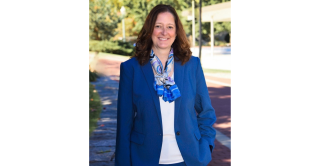
Dr. Kimberly T. Kostelis appointed interim president

The Sociology Department adopted the 4th credit model for its upper-level courses in Fall 2013 as an opportunity for faculty to develop and implement innovative and applied learning experiences that would be beneficial for sociologists of the future. This curriculum was approved with the understanding that a variety of applied learning experiences can account for the 4th credit. The learning experiences would be in addition to the already expected amount of workload in classes, and it would add an additional 15 contact hours for the semester. The additional 15 contact hours may involve: lab or studio experience, direct faculty instruction assisting students on performing effective research or developing information literacy skills, service learning or engagement in the community, educational experience abroad or relevant cultural community experiences, contact with new technology related to their field of study, plus a few others.
SOC 410 Quantitative Research
Learning how to create and deploy quantitative or qualitative surveys in Qualtrics, on top of working with SPSS. In Spring 2027, students will also begin to learn the program R, a statistics analysis program that various employers use. CITI research ethics certification is required. STAT 104, 215, or PSY 215 are a prerequisite for this course.
SOC 478 Special Topics, now SOC 250 Latina Identity and Empowerment
Interviewing community agencies, coordinating guest presentations and bringing in guest speakers related to empowering Latinx communities
SOC 441 Sociology of the Aging Body
Creating policy reports that present the needs of Connecticut’s aging population and presenting these via a formal presentation. CITI research ethics certification is required.
SOC 376 Sociology of Health and Illness
Writing health awareness research briefs (similar to the CDC’s MMWR) comparing health predictors and outcomes between different countries, using the OECD online dataset.
SOC 455 Males, Manhood, and Masculinity
Developing an original research study and collecting primary data on topics related to men’s health, mental health, socioeconomic challenges, family roles, socialization experiences in school environments, etc. CITI research ethics certification is required.
SOC 305 Social Movements and Collective Action (taught by Dr. Ashley Green)
Students work in groups on a Social Movement Podcast Project. Students gain employable skills through working as a team, sending professional emails to communicate with local community organizations, and crafting podcasts that make academic research accessible to the general public. Students also gain skills in crafting interview questions and conducting interviews, which are applicable in both research and professional settings. Additionally, students interact with and learn from local community organizations that are engaged in social movement organizing.
In SOC 441 Death and Dying (taught by Prof. William Pilkingon)
This course includes Research and Information Literacy in the form of an extra research paper that compares the grief of a character (Carl) from the movie UP with the grief of an individual interviewed by the student. Class content plus additional research through articles is required to assess how the individuals’ grieved a major death. The paper must also include theories of grief, styles of grieving, cultural patterns, relational impact, and spirituality. This course also includes Higher Level Critical Thinking by having students complete a weekly reflection of the previous class content. Students reflect and demonstrate personal growth as they share life experiences dealing with grief and deeper understanding of what occurred, and behaviors which would provide growth and healing through their grief. Often students utilize their knowledge with family and friends to support their healing.
To become a sociology major or minor, please fill out a Change of Major form and drop off, or email the form, to the Sociology Department Chair, Dr. Heather R. Rodriguez hrodriguez@ccsu.edu in the Sociology Department, Bassett 317.
We are a smaller department with small class sizes and plenty of on-on-one faculty contact. We would be happy to have you and support you in your academic journey!